




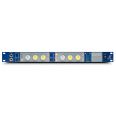
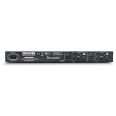
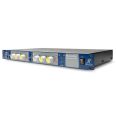

Focusrite Pro ISA Two Microphone Preamp
Classic Dual Mono Transformer-based Microphone Preamp
MPN: MOIFTWOAUKEU SKU: MOIFTWOAUKEU

You may only need a couple of mic preamps, but they need to be the very best. The ISA Two dual-mono mic pre is the ideal solution: two independent channels of the highest quality classic Focusrite mic pres, with line in and front-panel instrument inputs – no DI box required. Based on the legendary designs found in the Focusrite Forte and Studio Consoles, ISA Two is the ideal front-end for your rack.

Ask our team about our Price Match Pledge.
Get in touch
In stock
Call for Lead Time
Focusrite’s ISA Two microphone preamplifier supplies the brand’s esteemed ISA transformer-based preamp at an industry leading price in a robust and mobile chassis. ISA Two delivers the definitive vintage microphone preamplifier topology from the innovative ISA110 module, which served as the cornerstone for every channel of Focusrite's critically acclaimed Forté console. The preamps are harmonised by line inputs and independent DI channels, complete with devoted gain controls, active or passive impedance switches, TRS Jack outputs for routing to an amp and autonomous XLR outputs on the rear.
This adaptable independent DI means that the ISA Two is perfectly suited both for demanding performers who need a solution for guitar and vocals and engineers wanting to blend DI’d guitar signals with mic’d guitar cabinets.
The user has the capacity to alternate between four carefully selected input impedance settings, thanks to an additional variable impedance circuit. On top of the foundation ISA110 impedance, three extra impedance settings create the possibility for perfect matching, or creative mismatching of the preamp with any microphone. ISA Two also includes an insert point, if the need arises to place extra processing between the preamp or DI and the optional converter. Phantom power, phase reverse and a 420Hz, 18dB/octave high-pass filter are also available from the angled front panel.
Independent input metering for each channel is delivered in the form of a moving coil VU meter with variable calibration to suit analogue and digital recording media, as well as two six-LED peak meters; inputs can be metered either pre- or post-insert. The meter calibrations use all the same reference points as Avid's Pro Tools HD system, allowing seamless line-up.
Lundahl LL1538 mic input transformer: Rupert Neve originally chose the Lundahl LL1538 to be the input transformer on the ISA 110. To this day the Lundahl transformer remains the best microphone input transformer available, and is used in every ISA Series mic pre. Rupert Neve also perfected the Zobel network found in the ISA circuit; something which takes a lot of knowledge and a golden set of ears. This allows the ISA mic pre to maintain an extremely flat frequency response across a very wide bandwidth
Up to 80 dB of gain: ISA Two offers up to 80 dB of clean, distortion-free gain. The much-heralded ISA topology also ensures low-noise even at the highest gain levels. The transformer alone supplies 20 dB of gain, while ISA’s input stage offers up to 60 dB in addition, giving an astonishing 80 dB of maximum gain on the microphone input
Variable input impedance: Four choices of input impedance, including the original ISA 110 value, allow you to match the preamp to your microphone, even if it's a vintage type, giving you the best possible sound. The impedance is selected using a switch on the front panel, and the impedance choice is remembered even once the unit is switched off and back on
User-calibrated metering: Each channel has an eight-LED array to clearly display the level of your two signals. You can line up your analogue evels with your converters or DAW by using the calibration knob on the rear panel. You will be safe in the knowledge that you have avoided clipping on the way in
Front-panel instrument and rear panel line inputs: Two 1/4in jack sockets on the front panel of ISA Two give you instant access to a transparent DI input. TRS line inputs are available on the rear panel too, and you can step through them instantly to select the one you want
Variable cut-off high-pass filter: Built in, and easily accessed with its own large knob and illuminated button, is an extremely smooth-sounding 18 dB/octave high-pass filter of the same design as the original ISA 110 module. This is ideal for cutting out rumble, thumps and other unwanted low-frequency sounds and with a range of 16 to 420 Hz, it's easy to lose what you don’t want, and keep what you do
Rear panel balanced inserts: Each channel of ISA Two has its own balanced insert point. With 1/4" TRS send and receive connections, your choice of signal processor can be connected and switched in and out using the illuminated switch on the front panel
Two channel classic Focusrite ISA transformer-based preamps
Front panel, per channel
- 1/4" instrument input
- Variable input impedance - Low, ISA 110, Medium, High
- Input selection - Mic, Line, Instrument
- 0 - 30 dB/30 - 60 dB gain switch
- Phantom power switch
- Phase invert switch
- 0 - 60 dB gain in 10 dB steps
- 0 - +20 dB continuously variable trim
- Variable high-pass filter with on/off switch
- Insert point on/off switch
- Eight-LED user-calibrated level meters
- Single power switch
Rear panel, per channel
- XLR-F mic inputs
- 1/4" TRS line inputs
- 1/4" TRS Sends
- 1/4" TRS Returns
- XLR-M line output
- Single peak meter calibration dial
- Single IEC power socket
Maximum Input and Output Levels
- Maximum Output Level: +24 dBu with a THD+N < 0.01% at 1kHz measured with 150 Ω source impedance and 22Hz/22kHz band-pass filter
- Maximum Microphone Transformer Input Level: +7 dBu with a THD+N < 0.7% at 1kHz measured at 0 dB of gain with 150 Ω source impedance and 22Hz/22kHz band-pass filter
Mic Input Response:
- Gain range: 0 dB to +60 dB in 10 dB steps, plus 0 dB to +20 dB continuously variable trim
- Input Impedance (Switched Impedance setting quivalent Input Impedance at 1 kHz
Low = 600 Ω
ISA 110 = 1.4 kΩ
Med = 2.4 kΩ
High = 6.8 kΩ
- EIN (Measured at 60 dB of gain with 150 Ω source impedance and 22 Hz-22 kHz band pass filter): -127 dB
- Noise (Noise at output with unity gain (0 dB) and 22 Hz-22 kHz band pass filter): -97 dBu
- Signal-to-Noise Ratio (Measured with 150 Ω source impedance and 22 Hz-22 kHz band pass filter): 121 dB relative to max output +24 dBu
- Total Harmonic Distortion + Noise (Measured with a -20 dBu input signal at +30 dB of gain and with a 22 Hz-22 kHz band pass filter): < 0.0007% at 1 kHz
Frequency Response At minimum gain (0 dB)
- -0.5 dB at 10 Hz
- -1 dB at 135 kHz
- relative to 1 kHz
- -6 dB at 10 Hz
- -1 dB at 115 kHz
- relative to 1 kHz
CMRR (Common Mode Rejection Ratio)
- -94 dB for mic input at 60 Hz for max. output = +24 dBu
- -91 dB for mic input at 10 kHz for max. output = +24 dBu
Crosstalk Channel to Channel: Mic input, with I/P = 0 dBu, gain = 0 dB @ 1 kHz input to channel A, channel B output = -85 dB
Line Input Response:
- Gain Range: -20 dB to +10 dB in 10 dB steps, plus 0 dB to +20 dB continuously variable trim
- Input Impedance: 10 kΩ from 10 Hz to 200 kHz
- Noise (Noise at main output with gain at unity (0 dB) measured with 50 Ω source impedance and a 22Hz - 22 kHz band pass filter): -97 dBu
- Signal-to-Noise Ratio (Measured with 50 Ω source impedance and a 22 Hz-22 kHz band pass filter): 121 dB relative to max output +24 dBu
- Total Harmonic Distortion + Noise (Measured with a 0 dBu input signal, +10 dB of gain and a 22 Hz-22 kHz band pass filter): < 0.002% at 1 kHz
Frequency Response At unity gain (0 dB)
- -0.3 dB at 10 Hz
- -1 dB at 80 kHz
- relative to 1 kHz
Crosstalk Channel to Channel (Line input, with I/P = 0 dBu, gain = 0dB @ 1 kHz input to channel A: Channel B output = -91 dB
Instrument Input Response
- Gain Range: +10 dB to +40 dB continuously variable trim
- Input Impedance: > 2 MΩ
- Noise (>Measured with 22 Hz-22 kHz band pass filter): Minimum gain (+10 dB) = -95 dBu
Frequency Response At minimum gain (+10 dB)
- -0.1 dB at 10 Hz
- -1 dB at 115 kHz
- relative to 1 kHz
- Frequency Response At maximum gain (+40 dB)
- -2.5 dB at 10 Hz
- -1 dB at 110 kHz
- relative to 1 kHz
High-Pass Filter
- Roll-Off: 18 dB per octave (3 pole filter)
- Frequency Range: Continuously variable from 16 Hz to 420 Hz (-3 dB)
Dimensions and Weight
- 480 mm x 280 mm x 44 mm (W x D x H)
- Weight: 3.7 kg
 Expertise
Our team of audio experts are here to help you find the right solution for your studio.
Get in touch ESV Insight

AUTHORISED DEALER
Genuine products with full
warranty and support
EXPERT ADVICE
Speak to real people
who know their gear.
FAMILY-RUN
A personal friendly service
you can rely upon.
TRUSTED
Studios, broadcasters and
creators across the UK.
FAST & FREE
Free UK delivery
on orders over £249